Science Friction
Suspended
-
Joined
-
Last visited
Everything posted by Science Friction
-
^^^^ "sight" to see.
-
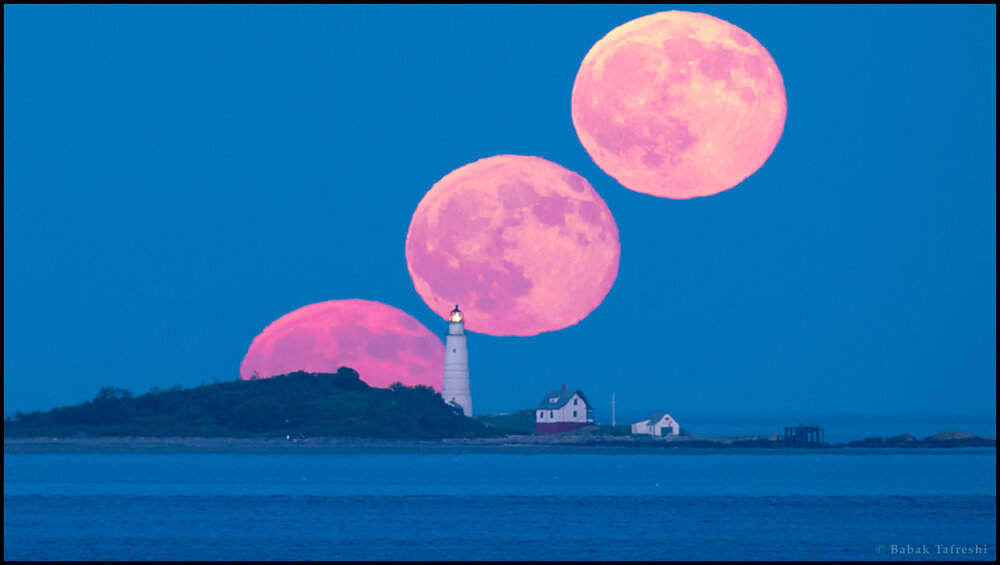
Some of you may remember me talking quite a bit about the full moon back in July, referred to as the Thunder Moon. It was quite a site to see. Here's a time-lapse image from back in July of the Thunder Moon over Boston Harbor. Because the long sight-line through layers of the atmosphere filters and refracts the moonlight, you'll notice the big moon's reddish color, ragged edges, and distorted shape near the horizon. Enjoy!!!
-
My first two Corbin -Mayfield games were '76 and '77, both AA state championship games. In '76, we won 6-0 in the cold and snow at Commonwealth stadium. And let me tell you something, those two teams were the two best in the state that year regardless of class. There's absolutely no doubt in my mind about that. In '77 at EKU , the Cards beat Corbin 14-13, stopping the Hounds at the goal line on a two-pt. conversion on the last play of the game. Coach Powers try to cross up the Cards by giving the ball to our freshman back, Roy Taylor, instead of the senior back who had run wild all day. The Cards stopped Taylor right at the goal line. Like, I said, Corbin and Mayfield go way back. They are old rivals. The games are always hard fought and the programs have long ago earned each other's respect. I love Corbin-Mayfield games. I would like to see both teams win their respective state titles. While it wouldn't shock me if both teams win out the rest of the way, they each have some work to do. Both the Hounds and Cards will be very tough outs come playoff time.
-
Gone but not forgotten... Any ideas why I am showing this picture in the astronomy thread? Look close.

-
Agree. Also, let me echo what others have said. I hope these two schools continue to play each other. It just doesn't get much better than Corbin-Mayfield. Those two have a long history that goes back to the mid seventies. Great programs every year, great respect for each other, and always great battles. Coach Morris is adding to the Morris family coaching legacy and young Haddix is making his mark and building on the tradition at Corbin. Mayfield and Corbin--- all they do is win!!!
-
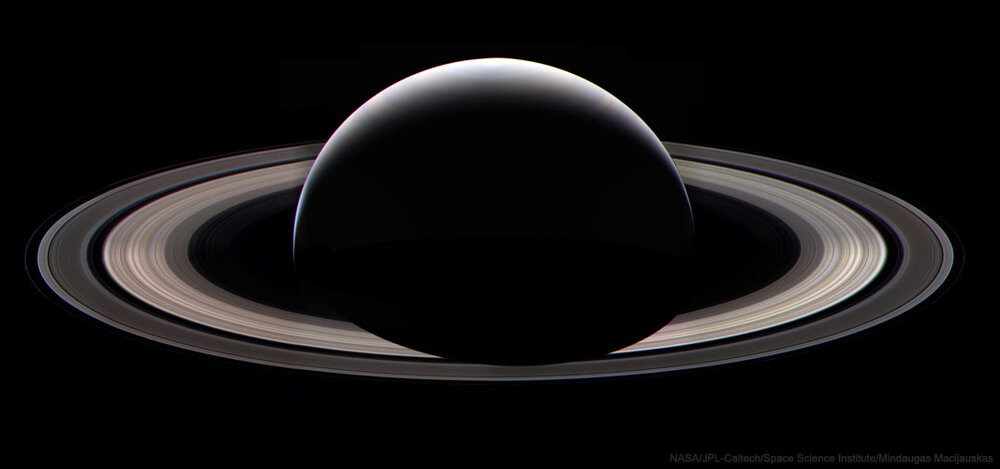
Cassini's final pictures of Saturn... Three days before plunging into Saturn's sunny side, the robotic Cassini spacecraft swooped far behind Saturn's night side with cameras blazing. Thirty-six of these images have been merged into a last full-ring portrait of Cassini's home planet for the past 13 years. The Sun is just above the frame, causing Saturn to cast a dark shadow onto its enormous rings. This shadow position cannot be imaged from Earth and will not be visible again until another Earth-launched spaceship visits the giant ringed-world. Enjoy!!!
-
I know OLD is correct. Probably, the OLD English term for neighborhood "neahdæl" would be more appropriate for your old hood.
-
No doubt !!!
-
Just really pleased to see Somerset back and doing so well. Would love to see a state title in the near future. Corbin fans have great memories of when the Hounds and Briar Jumpers were battling in the same district. We here in Corbin are rooting for Somerset to do well.
-
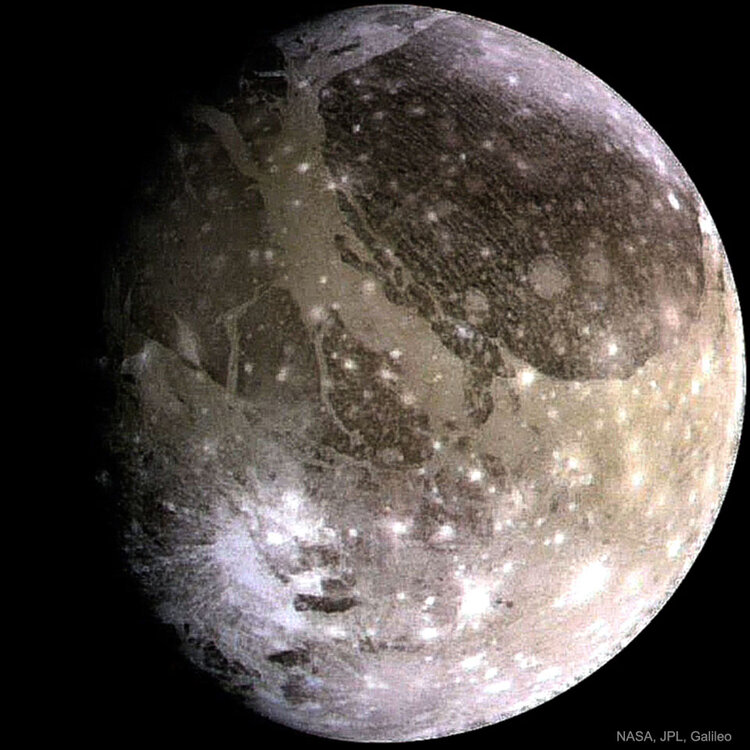
I believe that the ESA is planning a mission called JUICE that will launch in 2022 set to arrive at Jupiter in 2030. The main focus of the mission will be Ganymede. Ganymede's core is metallic iron. Outside the core there is a layer of rock topped off by a crust consisting of mostly very thick ice. There are primarily two types of terrain on Ganymede's surface. About 2/5 is dark with numerous craters while about 3/5 is lighter and has grooves that form intricate patterns that give it the distinctive appearance you see in the picture I posted above. The grooves were most likely the result of tectonic activity or water being released from beneath the surface. The grooves are nearly a half mile high and stretch for thousands of miles. Ganymede is believed to have a saltwater ocean beneath its surface. The ocean is likely more salty than the oceans of Earth. Despite the fact that the large moon has an ocean, I'm a bit doubtful that Ganymede is all that ripe for hosting life. I hope I'm wrong, but I believe the pressure at the base of the ocean would be so high that the water would be frozen, thereby not allowing for any vents of hot water to bring life-essential nutrients to the ocean. Let's hope by 2030, I am proven wrong and we will detect some little Ganymedean creatures swimming around in that salty ocean.
-
For BGP'ers who want to do some sky-gazing this week: Monday, September 25 The waxing crescent Moon sets shortly after 10 p.m. local daylight time, and its absence from the morning sky these next 10 days provides observers with an excellent opportunity to view the zodiacal light. From the Northern Hemisphere, early autumn is the best time for viewing this elusive glow before sunrise. It appears slightly fainter than the Milky Way, so you’ll need a clear moonless sky and an observing site located far from the city. Look for a cone-shaped glow that points nearly straight up from the eastern horizon shortly before morning twilight begins (around 5 a.m. local daylight time at mid-northern latitudes). The Moon remains out of the morning sky until October 4, when the waxing gibbous world returns and overwhelms the much fainter zodiacal light. Tuesday, September 26 You can use the waxing crescent Moon as a guide for finding Saturn this evening. The Moon stands out in the southwestern sky as darkness falls, while the ringed planet appears as a bright point of light just 3° below it. The two hang nearly 25° above the horizon around 8 p.m. local daylight time. Although this conjunction looks best with naked eyes or binoculars, it’s always worth targeting Saturn through a telescope. This week, the planet’s globe measures 16" across while its spectacular ring system spans 37" and tilts 27° to our line of sight. Wednesday, September 27 First Quarter Moon occurs at 10:54 p.m. EDT. When the Sun sets this evening for North American observers, the half-lit Moon appears due south and one-third of the way from the horizon to the zenith. As darkness descends, our satellite grows more prominent against the background stars of northern Sagittarius, above that constellation’s Teapot asterism. The Moon reaches apogee, the farthest point in its orbit around Earth, at 2:50 a.m. EDT. It then lies 251,250 miles from Earth’s center. Thursday, September 28 Uranus reaches opposition three weeks from today, but it already has become a tempting evening target. The ice giant world rises before twilight ends and climbs nearly 30° above the eastern horizon by 10 p.m. local daylight time. The magnitude 5.7 planet lies in Pisces, 1.2° northwest of magnitude 4.3 Omicron (o) Piscium. Although Uranus glows brightly enough to see with the naked eye under a dark sky, binoculars make the task much easier. A telescope reveals the planet’s blue-green disk, which spans 3.7". Friday, September 29 Although autumn arrived with the equinox a week ago, the Summer Triangle remains prominent in the evening sky. Look high in the west after darkness falls and your eyes will fall on the brilliant star Vega in the constellation Lyra the Harp. At magnitude 0.0, Vega is the brightest member of the Triangle. The second-brightest star, magnitude 0.8 Altair in Aquila the Eagle, lies some 35° southeast of Vega. The asterism’s dimmest member, magnitude 1.3 Deneb in Cygnus the Swan, stands about 25° east-northeast of Vega. For observers at mid-northern latitudes, Deneb passes through the zenith around 9 p.m. local daylight time, nearly an hour after the last vestiges of twilight disappear. Saturday, September 30 Brilliant Venus rises around 5 a.m. local daylight time, shortly before morning twilight starts to paint the sky. The inner planet shines at magnitude –3.9 — far brighter than any other point of light in the night sky — and remains prominent even as twilight brightens the sky. A telescope reveals the planet’s 11"-diameter disk, which appears about 90 percent lit. Sunday, October 1 About 15 minutes after Venus pokes above the eastern horizon this morning, Mars rises directly below it. The Red Planet shines at magnitude 1.8 — less than 1 percent as bright as its neighbor — though it still stands out nicely against the twilight glow. The two planets will edge closer to each other over the next few days in the run-up to a spectacular October 5 conjunction.
-
A few years ago, when I was in Richmond, I visited a Japanese Health Spa in hopes of maybe receiving a comforting massage. Maybe I went to the wrong place. I could have sworn the young woman who was to administer the therapeutic rubdown mentioned the name of this little planetoid referenced in the post above. I couldn't begin to think of why she would want to talk about astronomy. That was the last place I expected to get blinded by science. Well... turns out she apparently had something else altogether in mind. The dwarf discovered in 2005 which I referenced is called Makemake( pronounced MAH-kay MAH-kay) .
-
Can you name this object...???? Discovered in 2005, it is one of the largest objects known in the outer solar system(although it is only about 870 miles in diameter). This Kuiper( no relation to Duane) belt object is only slightly smaller than Pluto, orbits the Sun only slightly further out than Pluto, and appears only slightly dimmer than Pluto. Its orbit, however, is much more tilted to the ecliptic plane of the planets than Pluto. Not long after its discovery, the object was classified as a dwarf planet under the new subcategory plutoid, making it the third plutoid along with Pluto and Eris. The plutoid is known to be a world somewhat red in appearance, with spectra indicating it is likely covered with frozen methane. It was named for the creator of humanity in he Rapa Nui mythology of Easter Island. Back in April of last year, astronomers discovered that this dwarf planet had a tiny moon with a diameter of just 100 miles across orbiting it. Can you identify this dwarf planet in the outer reaches of our solar system? Hint: Sounds kinda like what some call dolphin.
-
Ganymede, the largest of the four Galilean moons , the largest moon in our solar system, the ninth largest body in the solar system.
-
Eleven years ago, the European Space Agency's SMART-1 spacecraft ended its three-year moon-orbiting mission by crashing itself into the lunar surface. This planned crash had a two-fold purpose: To simulate meteor impacts on the moon for scientific study and to potentially throw up deeper materials such as water ice to be identified in order to help us better understand our moon's composition. While the impact back in 2006 was seen via telescope, recent observations of the Moon have revealed the exact location of the crash site on the lunar surface. According to one scientist who worked on the SMART-1 project, finding the exact location of the spacecraft's final resting place "had become a "cold case" for more than 10 years." In the picture below, notice the 66-foot-long gouge, seen running across a pre-existing crater on the Moon . This image shows the final moments and ultimate resting place of SMART-1.

-
Thanks. I hate when idiot announcers whine about officiating. I was really surprised that the Corbin defense held the Mayfield attack in check as much as it did.
-
The NK people have been brainwashed to believe that their Great Leader ...Lil Kim ... is their Savior and that America is the Great Evil. From the time kids are born they are programmed to think that way. NK is a bizarre and frightening reality... A national cult willing to commit mass suicide and global homicide if The Leader deems it necessary.
-
I wasn't at the game but I wanted to ask some of those who were in attendance about the officiating. The Cobin broadcast crew were all over the stripes for most of the game. They said Mayfield must have brought the refs with them to TN. Was it as terrible as it seemed listening to the Corbin broadcast? I know there was about a 3 to 1 disparity in penalty yardage.
-
Hey, half a billion is peanuts in astronomical terms. Lol Btw, Titan is the SECOND largest in that same category.
-
Corbin won all three phases of the game tonight.
-
Btw. Love having you talk astronomy with us.
-
It's somebody's moon. Hint at the lower right of the picture.
-
Who wants to take a guess at what this object is? Hint: It's the largest in a certain category.
-
Good gracious!!! Yessir indeed. Leonardo Da Vinci was first to explain Earthshine. In fact, I think some refer to it as Da Vinci glow.
-
Go right ahead, J-Dad.